20 MAY 2026 · 16:14

THE EARTH SHOOK!

Right under Copenhagen in Køge Bay the earth woke up – and shook all of Zealand

3.9 magnitude
30 km south of Cph.
10 s of shaking
What happened?

A quake under Zealand

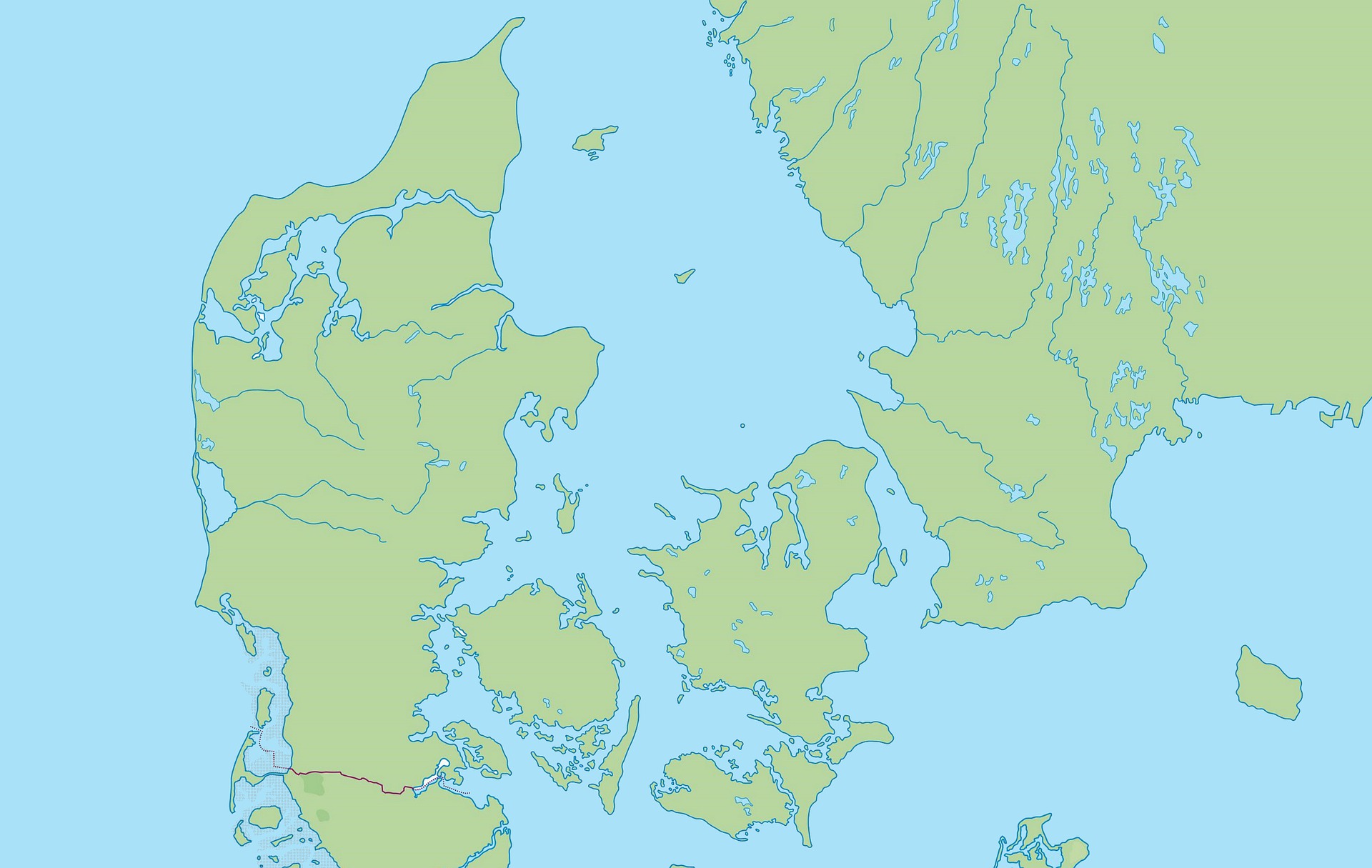
Map of Denmark RISING North-east Jutland: up to +1.75 mm/yr Zealand: about +0.5 mm/yr SINKING up to −0.4 mm/yr The Wadden Sea exposed to flooding NORTHERN TILT LINE Ringkøbing — Fakse SOUTHERN TILT LINE (NEW) Fanø — Sønderborg — Gedser SORGENFREI-TORNQUIST ZONE EPICENTER Køge Bay · M 3.9

Press the buttons to show or hide the geological lines.

On Wednesday afternoon, 20 May 2026, many Danes were sitting at home or at work. Suddenly the floor began to rumble and shake. Some thought at first it was a big lorry. Others thought it was thunder.

But it was a real earthquake – one of the biggest ever measured in Denmark! Dogs barked, glasses clinked, and a TV even fell off the wall in Nørrebro. Luckily nobody was hurt.

Denmark lies in the middle of a tectonic plate, so we rarely feel earthquakes. Usually only sensitive measuring instruments detect them.
Grandad's question

Why does it happen in Denmark?

You are almost right! Denmark actually tilts because of the Ice Age — that is one of three reasons why we feel earthquakes here, far from the big plate boundaries.
🧊

The tilting land

During the last Ice Age a 3 km thick ice sheet lay on top of Scandinavia. It was so heavy that the land was pressed down into the deep layers of the earth — just like when you sit on a soft sofa cushion.

When the ice melted about 10,000 years ago, the land slowly began to rise again. It is still happening today — and it happens unevenly. Across Denmark runs an invisible tilt line from Ringkøbing across Funen to Fakse:

🔼 North of the line the land is rising. Skagen gains most with +1.75 mm/yr. Copenhagen and Aarhus are rising by +0.5 mm/yr.
🔽 South of the line the land is sinking by up to −0.4 mm/yr. That is especially bad for the Wadden Sea, because the land is sinking at the same time as the sea is rising.

Newer GPS measurements have found yet another tilt line, running further south — from Fanø via Sønderborg to Gedser. Stresses from this slow movement can trigger earthquakes.

🪨

The old crack

Right through Denmark runs an old crack in the Earth's crust called the Sorgenfrei-Tornquist Zone. It is several hundred million years old — from the time when the old Nordic bedrock was pushed together with the rest of Europe.

The crack runs from the North Sea through North Jutland, north of Zealand, through Scania and down towards Bornholm. It is a line of weakness where stiff bedrock meets softer layers.

Almost all Danish earthquakes happen in or close to this zone — including the quake of 20 May 2026 in Køge Bay.

🌍

Pushes from distant continents

We lie in the middle of a large stiff plate — the Eurasian plate. But the plate is being pushed from two sides:

Africa is pressing north towards Europe by just under a centimetre a year. That is why the Alps are still growing.

Iceland lies right on the line where North America and Eurasia are sliding apart. Half of Iceland pushes Europe eastwards.

These pushes build up stresses inside the plate. When the pressure becomes too great at a weak spot — like our old crack — then crack!

How Denmark tilts

Drag the timeline or press Play and see how the land rises after the enormous weight of the Ice Age.

The Earth's mantle (flows slowly) before the Ice Age THE TILT LINE 3 km thick ice sheet DENMARK SOUTH-WEST sinking slowly NORTH-EAST rising
Time today
Ice sheet gone
Skagen +1.75 mm/yr
10,000 years ago today

10,000 years ago a 3 km thick ice sheet lay on top of Scandinavia. When the ice melted, the land began to tilt around the tilt line — and it still does.

Just after the Ice Age, the disappearance of the ice was the main cause of earthquakes. Today it is mostly the plate movements — but the pressure from the Ice Age is still part of the explanation.
Inside the earth

Our rumbling planet

If you could cut the Earth in half like an apple, you would discover that it has four different layers. Click on the layers to learn more!

Inner core Outer core Mantle ↓ Crust ↓

Press a layer

The Earth is built up of layers like a giant onion. Click your way through them!

The jigsaw planet

Tectonic plates

The Earth's hard surface is like a jigsaw puzzle of huge plates that slowly slide around – only a few centimetres a year (about as fast as your nails grow!). When they bump into each other, earthquakes and volcanic eruptions happen.

🌋 Plates that slide apart

When two plates pull away from each other, hot magma wells up from below and makes new land. That happens in the middle of the Atlantic Ocean!

⛰️ Plates that collide

When two plates crash into each other, the ground is pushed up and makes mountains. That is how the Himalayas were formed – the world's highest mountain range!

⚡ Plates that rub past each other

When two plates push past each other, they can suddenly get stuck – and when they let go, there is a BANG! That is how many earthquakes start.

Four kinds of shaking

Types of earthquake

Not all earthquakes are the same! There are actually four different kinds.

🗺️

Tectonic earthquake

The most common of all! It happens when big plates in the Earth's crust press, tear or push against each other. The quake in Copenhagen was a tectonic quake.

🌋

Volcanic earthquake

When magma moves up through a volcano, the ground can shake. It is often the warning that the volcano will soon erupt!

🕳️

Collapse quake

If a big cave or an old mine shaft collapses far down in the ground, it can cause a small local earthquake.

💥

Man-made quake

Big blasts, explosions or atomic bomb tests can also make the ground shake. This is called a man-made earthquake.

BUM! 🌋

Volcanoes – the Earth's fire machines

A volcano is a place where liquid rock called magma pushes its way up from deep inside the earth. When it spurts out, we call it lava. Press the button – and the volcano will erupt!

Different mountains, different bangs!

Types of volcano

Volcanoes come in different shapes – some are flat like plates, others stand pointed like layer cakes!

Shield volcano

📍 Hawaii, Island

Flat and wide like a shield. The lava is very thin and runny and flows a long way – not so dangerous, but rather pretty to look at!

Stratovolcano

📍 Fuji, Vesuvius, Etna

The classic "cone volcano"! Pointed and tall with alternating layers of ash and lava. These can explode quite violently!

Cinder cone

📍 Mexico, USA

A small, simple volcano like a heap of sand. It throws out ash and small pieces of rock, but is rarely dangerous. Often lives only a short time!

Supervolcano (caldera)

📍 Yellowstone, Toba

The biggest and rarest! After a huge eruption the top falls in and makes a big hole – often filled with water like a lake. They are TOTALLY enormous!

Did you know that...

Fun facts

🌍
500,000 earthquakes a year!

Every day the earth shakes more than a thousand times – but most are so small that only fine instruments can measure them.

📏
The Richter scale is funny

A quake of 5 is not twice as big as one of 4 – it is 32 times more powerful! The scale counts up very quickly.

🐕
Animals feel it first

Dogs, birds and other animals can often feel an earthquake before people. They hear or sense the first tremors.

🇩🇰
Rare in Denmark

Denmark lies in the middle of a plate, so we almost never feel earthquakes. The quake on 20 May was one of the biggest ever here!

🌋
1,500 active volcanoes

Right now there are about 1,500 volcanoes on Earth that can still erupt. And under the sea there are many more!

🔥
The hottest lava

Lava can be up to 1,200 degrees hot! That is 1,100 degrees more than boiling water.

Test yourself!

Little earthquake quiz

Question 1 of 5

Well done! 🎉

0 / 5